
A Mark beside the Pivot
Cascade Volumes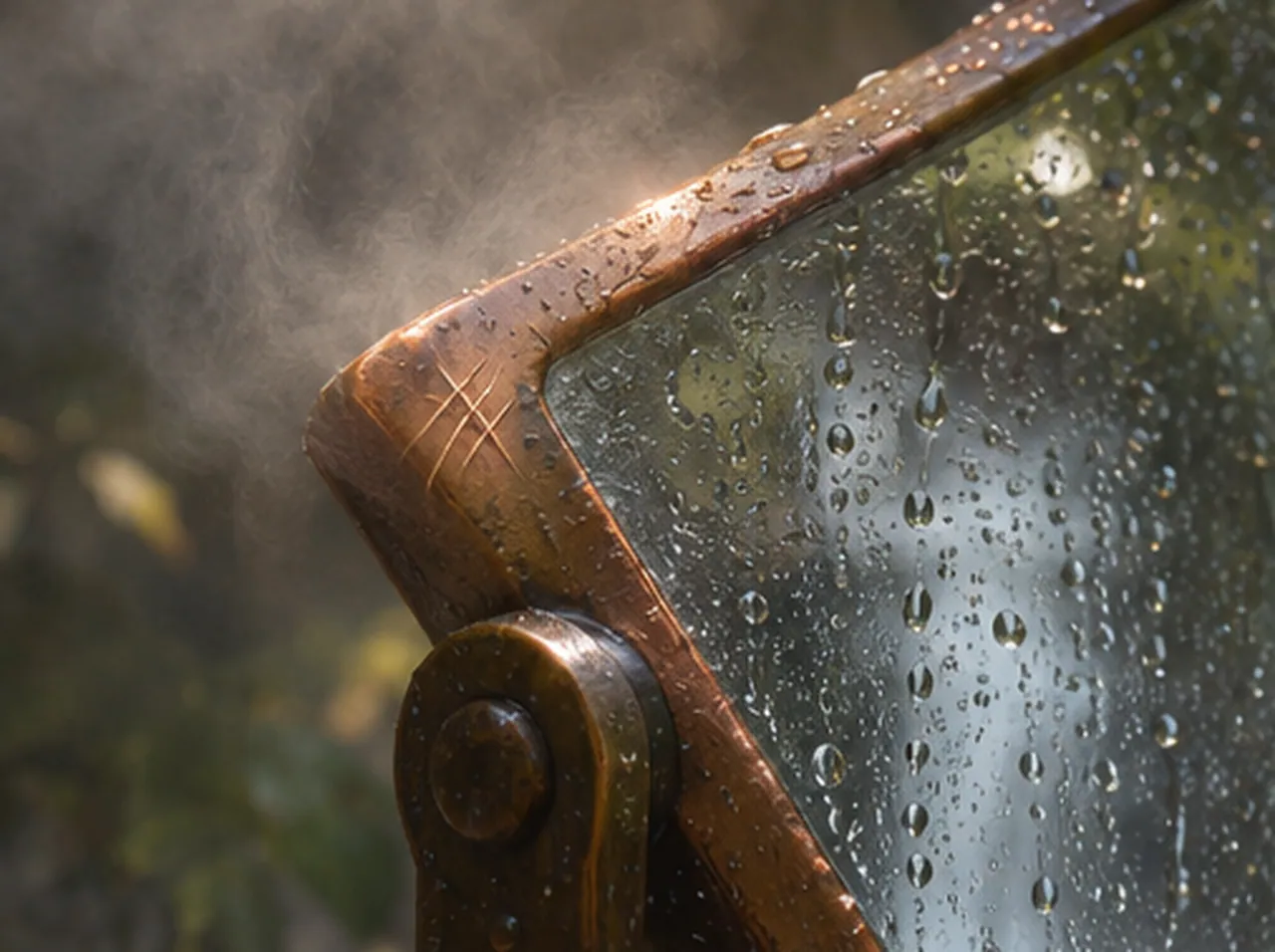
Find a reference on the moving part
The platform mirror has a round pivot with a slim metal cover around its edge. The lowest visible part carries two shallow scratches. When the mirror turns toward the pool, the second scratch approaches a fixed corner of the bracket. Their relation gives the player a way to judge a small change from the side. We added the scratches after a test where the reflection itself was hidden just before a useful angle.
Draw the beginning and end with the same rim
The first version made the fixed corner part of a thin outline on the mirror. That outline rotated along with the scratch. From the side both landmarks shifted together and gave no clue about the real direction of the movement. We moved the corner to the bracket and left enough space to see the dark gap beside it. The scratch now crosses that same gap when the mirror turns forward.
Separate water from an intentional mark
Several droplets accumulate around the pivot when the wind carries mist up onto the platform. The water takes a rounded highlight that can look like a tiny mark in one still. The scratch has a shallower angle, and it stays inside the copper rim rather than reflecting from the edge. Trace part of it with the eye as the droplets roll away. A short second scratch gives the older position a recognizable pair of angles.
Read from where the hand leaves the control
The player can check the mark before stepping to the rail. The view from that end nearly hides one scratch behind the bracket. The other remains visible beside the small dark space. On returning, the scratch that had disappeared comes back into view. The Mirror Above the Plunge makes that return possible before requiring a new adjustment. A known starting place is especially helpful when the broad waterfall view is bright.
Compare the bracket with the reflected rail
A Small Error at the Mirror uses the diagonal of a reflected board to compare near angles. That clue disappears when the glass becomes wet enough to diffuse the whole reflection. The mark remains readable from the side as long as the metal rim has a little contrast. Both cues can be viewed at the starting position. When a player turns the mirror and sees the rail move, the mark makes it possible to connect that movement to a certain part of the bracket.
Make an optional stop useful
The turning assembly has enough space for a temporary stop. Bring it close to the fixed corner at the first angle, where the two scratches set a small reference distance. Leaving the stop in place provides a position you can find without relying on the far image. There is still room to turn the other way and discover that another part of the spray is carrying light. The stop is a memory aid during a sequence of changing pictures.
Test a shadow under the pivot
The platform picture has a low shadow below the railing. At one angle that shadow falls over the entire scratch. We reduced the depth of the cover around the edge where the light comes in. A dark corner beneath the mark is still useful to tell the warm metal from the gap. The picture needs some shade at both ends of the turn so the bright face of the mirror remains separate from its rim.
Record the lowest useful contrast
The next test brings the view back to the bracket after a bright moment across the plunge. Follow the scratch while the reflection is hidden and compare how much of the position stays clear before the spray moves again. Cascade Volumes keeps this trial with the mirror adjustments. The purpose of the new drawing is seeing whether a small mark can recover meaning in a scene that has changed almost everywhere else.