
A Small Error at the Mirror
Cascade Volumes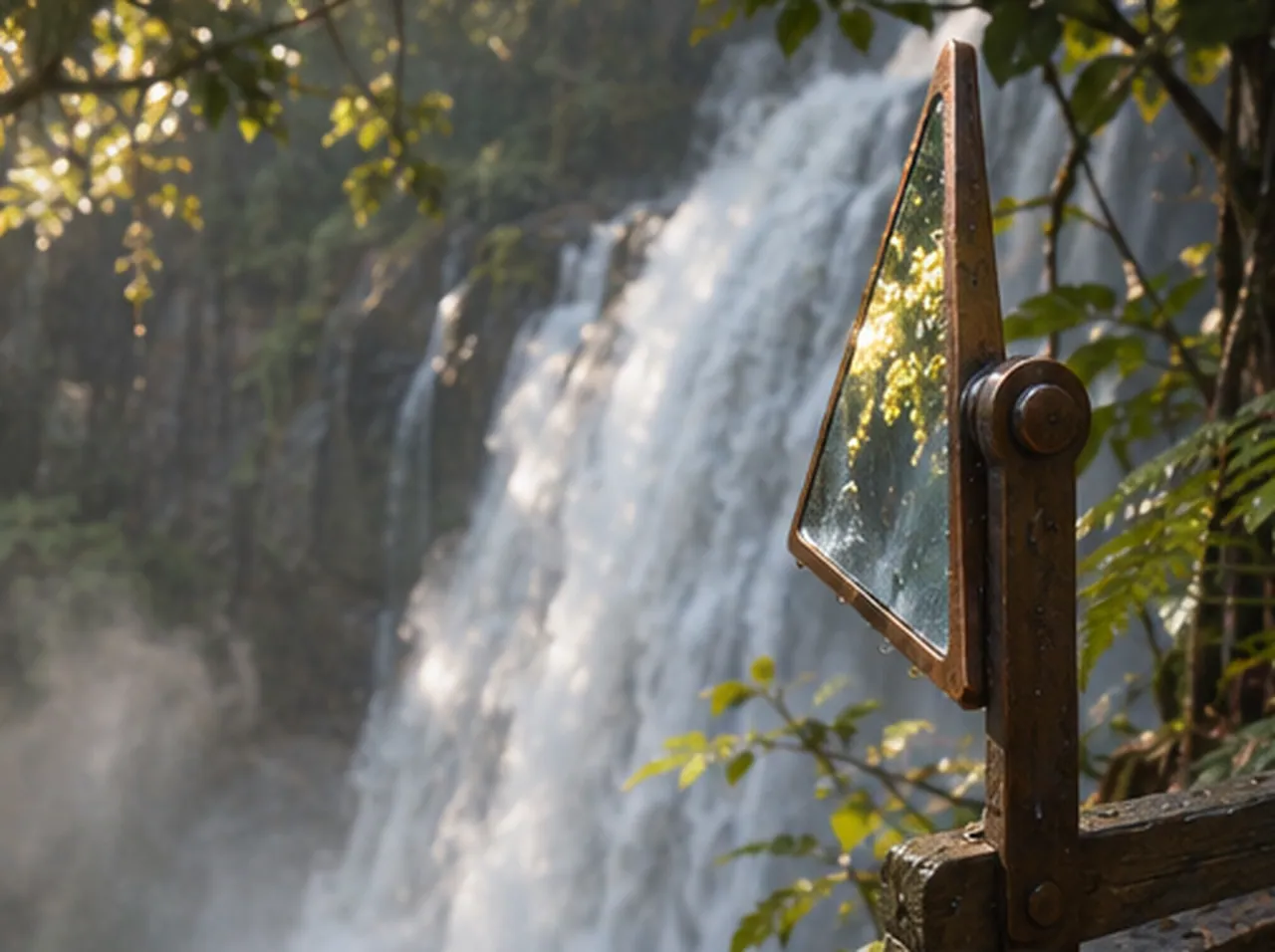
See one sharp edge before touching the bracket
The upper platform has a mirror above a wet rail. At the start you can see part of the rail in its face as a short diagonal. Move the mirror a small distance and that strip slips toward the edge. If you look from directly behind the bracket, you see the movement as a narrow patch of light wandering across the glass. The relation between the rail and the glass gives the first indication of whether the movement was larger than intended.
Keep a witness outside the mirror
In an early cut the angle indicator appeared on the mirror itself. You could follow an engraved line as it passed a second line, but the rest of the moving picture lost its importance. The latest study opens a slim view past the mirror where the actual rail stays visible. It becomes possible to compare the reflected rail with the solid one. In the broad water view the rail is always available in the same place as you return.
Respond to one change at a time
The first mirror test keeps the opening of the bracket fixed while the player turns the reflection to the left. There is one clean adjustment that moves the reflected strip closer to the outer edge. Turning a little too far takes the strip out of view. The faint reflection of a gap in the rail then appears behind it. That later sign can help a player reverse the movement without a message asking them to try again.
Let water delay the visible result
The bright area below the platform seems to follow the movement immediately in an earlier illustration. The current scene separates the action from the next clear view of its effect. A fast drift of spray can hide the patch for a moment. The movement of the rail in the glass remains visible while that happens. This gives the player local confirmation before there is enough light in the drops to judge the result from across the pool.
Set a mark before a second try
The bracket can hold an adjustable stop, which gives the player a repeatable starting position. A slight error after setting it becomes easier to study from the side. First look at the relation between the stop and the narrow edge of the mirror. Then move to the wide angle where the light patch begins. The Mirror Above the Plunge uses those two actions before people attempt a wider turn with the scout looking down upon the water.
Avoid a reflection that just mirrors the mouse
The input moves the mirror by a predictable amount. The noticeable effect in the image depends on how close the rail was to leaving the edge. A bright patch might appear suddenly after an orderly turn. Keeping one low contrast edge in the glass makes that near miss easier to notice earlier. If someone is following the far color without checking the mirror, the scene still lets them return to observe the missed information.
Shift the edge when we alter the view
A different place on the platform moves the solid rail up in the frame. Now the upper part of the reflection occupies more of the image. The relevant edge should remain near the same side of the glass. When we adjusted the picture to show more of the pool, that edge moved inward and we lost the useful comparison. A Mark beside the Pivot offers a position reference when the view itself is least dependable.
Another narrow test
The next workshop trial limits the movement to one shallow sweep that fits under the rail. We will watch when a player first decides they moved too far and whether they look at anything outside the mirror before reversing it. Cascade Volumes puts this study next to the scratch discussion because either reference can supply the missing information when the other is hard to see through the passing mist.